
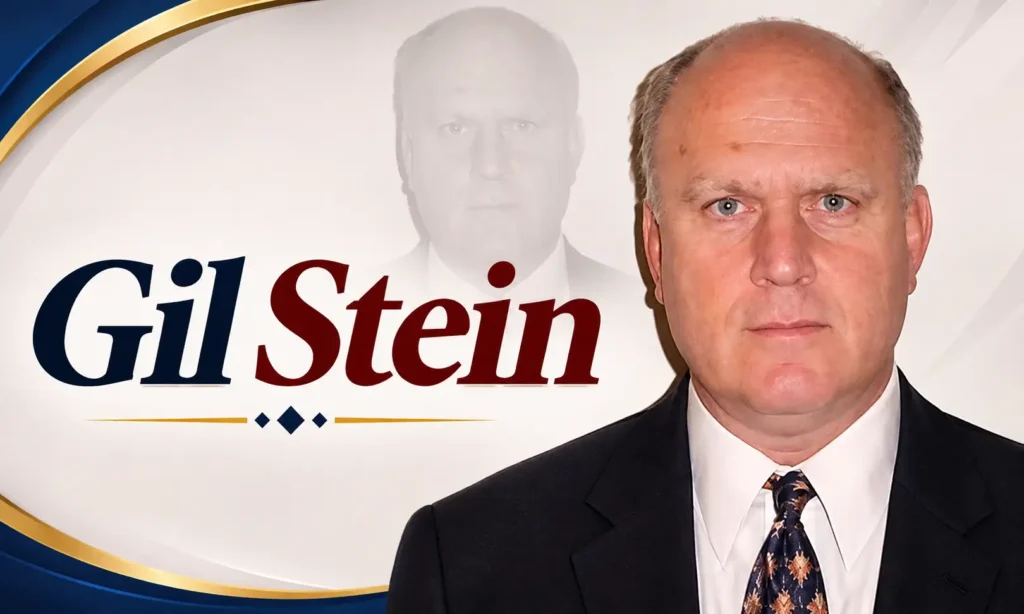
Gil Stein was awarded the Lester Patrick Trophy in 1993 for contributions to hockey in the United States. The same year he was forced to refuse induction into the Hockey Hall of Fame, when an inquiry ordered by his successor found he had rigged the process that elected him.
Both are true and neither has been the part of the story many people tend to recall. He would have had a much stronger case for a different one. Gilbert Stein, a West Philadelphia lawyer who stumbled into hockey at the age of 39, was the fifth and final NHL president. And when Stein vacated the post on July 1 1993 there was no replacement.
He was 94 when he died in March 2022, and the obituaries faced a challenge, as the two sides of his legacy tug in different directions.
Why the NHL Stopped Having Presidents
The NHL has had a president of the league since its founding in 1917 until the summer of 1993. This position has been held by five men: Frank Calder, Red Dutton, Clarence Campbell, John Ziegler and Stein. Today, the post is one of commissioner, a role held by Gary Bettman, since he assumed the position on 1 February 1993.
The move was the result of a strike. The union and its new leader, Bob Goodenow, struck on 1 April 1992, with thirty regular season games left and then-dominant owner-led league in limbo; they had returned by 10 April. The settlement included larger playoff bonuses, greater say over licensing of their own identities, and concessions around free agency and arbitration, and kept the rest of the season and the playoffs from ceasing to exist.
The owners hated the contract Ziegler had signed and canned him after the season. They were not interested in hiring a new hockey president, rather somebody who knew about labour law and business, so the searched for a commissioner and ended up with Bettman, who had been with the NBA.
Stein filled the interim position. He was appointed interim president on 22 June 1992 and officially confirmed on 30 September. Having been a candidate for the commissioner role himself, he withdrew and supported Bettman. The two then worked together for five months, serving simultaneously as commissioner and president, until Stein’s term ended.
From West Philadelphia to the Flyers’ Front Office
He was born in Philadelphia on 11 January 1928 and raised in the west and south of the city during the Depression. After high school he spent two years in the Army, leaving as a sergeant in 1947. He gained a degree at Temple University and a law degree from Boston University in 1952. Hockey had nothing to do with any of this. He was a guy who played basketball and liked to watch basketball.
His first two decades of work was city work and courtroom work. He was the Philadelphia regional director of the Pennsylvania Labor Relations Board in the late 1950s, then deputy city controller, deputy district attorney and executive director of the housing authority between 1958 and 1973. He was a litigation partner at the firm now called Blank Rome for five years in the 1970s.
His hockey career began in 1967, when the Flyers joined the NHL in its first major expansion and team owner Ed Snider first interested him in the sport. He took over as club counsel in 1972, then as chief operating officer and executive vice president in 1976. He was also the original president of the Maine Mariners, the Flyers farm team in the American Hockey League, which is an interesting coincidence given how it all ends: the Mariners took the ice for the Calder Cup, named for the first man to fill the position before Stein would be the last to hold it. He departed Philadelphia with two Stanley Cup rings from the Flyers of the mid 1970s.
Fifteen Years as the League’s Lawyer
He accepted a move to the league office in New York as vice-president and general counsel in 1977, a position he held for about 15 years, all of Ziegler’s years in the office.
This is the era of his career that no one discusses and that he outlived. He was the guy who, from the early 1980s to the late 1980s, brought the league through its legal issues during the television and cable battles of the day. In 1982, he testified to an U.S. Senate panel on cable retransmitting broadcast signals, the premier business dispute of the decade for all professional leagues.
By the time the owners needed somebody to hold the league together in the summer of 1992, he had been in the building for a decade and a half and knew where everything was.
The Job Nobody Wanted in 1992
His thirteen months in charge were busier than the length of them suggests. Here is what he actually did with the time.
| Year | What He Did |
|---|---|
| 1992 | Took personal control of player discipline. Brian O’Neill, who had managed the department for years, left the position that August. Stein had stated as president-elect that the old approach of lengthy hearings and drawn-out suspensions needed to end. Several accounts describe Stein as the person who removed him. |
| 1992 | Introduced a policy of suspending players for violent acts on days when they were not playing, such as practice days, rather than requiring them to miss games. The policy faced widespread criticism at the time. |
| 1992 | Oversaw the expansion that added the Mighty Ducks of Anaheim and the Florida Panthers. Phil Esposito of the Tampa Bay Lightning publicly objected, saying Stein had previously promised there would be no second Florida club before 1996. |
| 1992 | Significantly increased the public profile of the president’s office by attending games and giving interviews far more frequently than his predecessor. |
| 1993 | Supported allowing NHL players to participate in the Winter Olympics, arguing that it would help grow the game in Europe. NHL players eventually made their Olympic debut in 1998. |
| 1993 | Served alongside Gary Bettman from February, handed over the presidency on July 1, and remained a special adviser until retiring from the league that October. |
Gil Stein Career at a Glance
Laid out in order, the shape of it is a lawyer’s career with a hockey detour that lasted twenty years.
| The Question | The Answer |
|---|---|
| Full Name | Gilbert Stein, known throughout his hockey career as Gil Stein. |
| Born | 11 January 1928, Philadelphia, Pennsylvania. |
| Died | 24 March 2022, in Pennsylvania, of heart disease, aged 94. |
| Education | Attended Temple University, then earned a law degree from Boston University in 1952. |
| Military Service | Served two years in the United States Army and was discharged as a sergeant in 1947. |
| First Hockey Job | Became counsel to the Philadelphia Flyers in 1972. |
| Club Role | Served as the Flyers’ chief operating officer and executive vice-president from 1976, and became the first president of the Maine Mariners. |
| League Role | Served as NHL vice-president and general counsel from 1977 to 1992. |
| Top Job | Became the fifth and final president of the NHL, serving from June 1992 to 1 July 1993. |
| Major Honour | Received the Lester Patrick Trophy in 1993. |
| Book | Published Power Plays in 1997. |
| Afterwards | Worked as counsel to a United States Senate committee, then taught sports law at Villanova for sixteen years. |
The Hall of Fame Affair
And this is what he’s remembered for, and it needs telling properly, instead of that little two line version that normally goes about.
Stein served on the Hockey Hall of Fame board as league president. Before 30 March 1993 Hall of Fame vote he and the other board members made changes to how they were voting. Instead of requiring three quarters of the vote to be elected, they changed the requirement to a majority vote, and switched from a secret ballot to a show of hands.
The board also was revamped. Three of its 12 members were replaced, one of them Brian O’Neill, the man who had given up his league discipline job the previous August. A 4th seat had opened up upon the death of broadcaster Danny Gallivan. Stein took the four seats.
On 2 April 1993 came the announcement that Gil Stein had been inducted into the Hockey Hall of Fame as a builder, the first time a player or builder had been selected under the new criteria. Stein’s nomination letter was from Bruce McNall, then the chairman of the NHL board of governors.
Canada’s response was swift and bitter. He took on the likes of Gordie Howe and other Canadians who came out against it. Other members joined Costello in resigned in protest at the manner in which the decision was made, and failed to speak out in support of Stein. Blackhawks’ owner Bill Wirtz was critical of the Hall’s changes.
Bettman called upon Stein three times to drop his appeal. He would not. Bettman appointed two outside lawyers, Yves Fortier and Arnold Burns, to conduct the investigation.
What the Report Found, and What It Did Not
The report landed in August 1993. Both halves of it matter and they are usually reported separately, which is how the story gets distorted in both directions.
| The Question | What the Report Actually Said |
|---|---|
| Did he break any law? | No. The investigation found no violation of any law. |
| Did he break any league rule? | No. It found no breach of the NHL by-laws either. |
| So what did it conclude? | It concluded that he had improperly manipulated the nomination and election process to ensure his own election. |
| How, specifically? | By changing the voting rules, reshaping the board, and asking Bruce McNall to nominate him. McNall stated that the nomination letter he sent had been drafted by Stein. |
| Was anything else found? | The investigation found that Stein had used his position to block Brian O’Neill’s induction. |
| What did the investigators recommend? | They recommended that he should not be inducted at that time. |
| What did Stein say? | He disputed the finding that he had manipulated the process and said he had already told Bettman months earlier that he would decline the induction, regardless of the report’s conclusions. |
| What happened in the end? | He refused the induction. Bettman said he would implement the recommendations. Brian O’Neill was elected to the Hall of Fame the following year, in 1994. |
The fair summary is brief and needs to be said. He has been shown not to have violated any law or any rule. He can have pushed a process he had the power to push, in his favour, and he has surrendered the honour to avoid doing so.
He told his side of the story four years later in Power Plays. He also said that McNall had nominated him on his own initiative and other sitting presidents had been inducted while serving. But, he also said in Power Plays that he was obsessed with being in the Hall, he helped McNall get the nomination, he was told to withdraw by opposition and that he felt he should get in. It’s rare to see a guy air himself so thoroughly and that’s part of why this story is as documented as it is.
Why He Is Not in the Hall of Fame Today
Since he refused it in 1993 and was not inducted after that. Also this is a withdrawal, not an expulsion. He was elected, the election was studied, the investigators advised against induction thereat, and he declined before the matter being further pursued. He was never inducted, and there was so nothing to withdraw.
The Lester Patrick Trophy he received that same year came from a different committee and was a distinct award, which he retained. Same thing, Red Dutton, who was awarded the same trophy posthumously in 1993, creates a small coincidence connecting the league’s second president to its last one.
The Other Gil Stein
Quite a few of those who look for this name just aren’t even after the hockey.
Gil J. Stein a very well known American archaeologist, born in 1956, who was in charge of the University of Chicago’s Oriental Institute, who studies ancient Mesopotamia. No relation and no ties to the National Hockey League.
If the search produces university sites, excavation reports or papers on Mesopotamian trade that’s the other man. The hockey Gil Stein was born in 1928, was a lawyer, and died in 2022.
Gil Stein Physical Stats
Nothing has been published – that is the honest answer rather than a ‘gap’.
He never was a player, so no club ever provided a height, a weight, a position or a shooting hand. Hockey stats include physical measurements, since teams provide the information, but they don’t include lawyers or executives, and no definitive Stein measurement can be found.
What the record does show is what comes next. In his youth in Philadelphia, he was a basketball player before hockey entered his life. He served two years in the Army and was discharged as a sergeant in 1947, indicating he passed a military physical at age nineteen. He was 94 years old when he died in March 2022, which is a particularly long life. And, he wore two Stanley Cup rings from his time with the Flyers. Any location giving a height or weight for him has fabricated it.
Gil Stein Net Worth
No real net worth number has ever been established for him and this page isn’t going to make one up. He was a lawyer and an executive not a popular musician, he was never under contract and reported in any way and he died in 2022 and no estate figure was published.
What is documented is the shape of the earning, which is more useful. He practised law in Philadelphia for roughly two decades, including a run of senior city posts between 1958 and 1973 and five years as a litigation partner at the firm now called Blank Rome. He was a club executive at the Flyers from 1972, taking the chief operating officer role in 1976. He then held one of the senior legal jobs in North American professional sport, as NHL vice-president and general counsel, for about fifteen years, before thirteen months as league president and chief executive. After hockey he worked as counsel to a United States Senate committee, as special counsel to a senator, and on a presidential commission, and he taught at Villanova Law School from 2000 to 2016. He published a book in 1997.
That is the longest, best paid professional career you might imagine, in Law, sport, and government. It produces no published output at all, and no one has one.
Life After Hockey
He ended his career in the league in October 1993, and that is where most of the stories about him end. He continued to work on the side for over twenty years after that.
In 1995, he was counsel to the United States Senate Select Committee on Intelligence. From 1997 to 1999, he was special counsel to United States Senator Arlen Specter, and in 1998 and 1999 he was a member of a presidential commission on weapons of mass destruction. Between 2000 and 2016 he was an adjunct professor at Villanova University’s law school, where he taught sports law, an eminently sensible subject for a man who once argued the television rights of a professional league before a Senate committee.
He had been an adjunct professor in business law at Drexel University in 1967, the year the Flyers came to town and Ed Snider turned him on to hockey. He died, aged 94, of heart disease on 24 March 2022.
Where to Find Gil Stein Online
He died in 2022 and no personal accounts were found on any platform. Every channel was checked rather than assumed, and the table below is what the checking returned.
| Platform | What Is There |
|---|---|
| No confirmed account. Search results show other people sharing the same name. | |
| X (Formerly Twitter) | No confirmed account. Mentions of him mainly come from hockey history discussions and obituary posts by others. |
| No confirmed account. Searches return unrelated people and memorial posts. | |
| No confirmed account. Profiles under this name belong to other individuals, including academics. | |
| YouTube | No personal channel. Available footage consists mainly of archival news material uploaded by other users. |
| Official League Pages | The NHL’s obituary and the Philadelphia Flyers’ tribute are the closest sources to an official online presence. |
Anything presenting itself as his personal account is not his.
The Short Answer
Gil Stein headed up the National Hockey League for 13 monthsand the position was eliminated under his leadership.
What he actually accomplished during that period was workaday and largely logical. He acquired a league freshly battered by its first players’ strike and left as a league president ousted over the settlement. He acquired two more clubs, introduced tough discipline, elevated the profile of the job, advocated for the Olympians, then handed the job off to the commissioner he personally favored more than himself.
What he is remembered for rather is five months in 1993 when he wanted an honour badly enough to twist the rules to get it, and then was forced to give it up. He published a book confessing to just that, which is more than most in his position would do.
He was the last man to bear that title. Fifteen years as legal counsel to the league preceded it and over twenty years of work followed it. The thirteen months in between are the only portion of time that anyone disagrees about.
Frequently Asked Questions
Who was Gil Stein?
He was a Philadelphia lawyer who became general counsel of the NHL and then its fifth and final president, from June 1992 to July 1993.
Why was Gil Stein the last NHL president?
The owners replaced the presidency with a commissioner’s role after the 1992 players’ strike. Gary Bettman took office as the first commissioner in February 1993 and Stein’s term ended that July.
What happened with Gil Stein and the Hockey Hall of Fame?
He was elected in 1993 after rule changes he was involved in, an investigation concluded he had improperly manipulated the process, and he declined the induction. No law or league by-law was found to have been broken.
Is Gil Stein in the Hockey Hall of Fame?
No. He turned down the induction in 1993 and has not been inducted since.
What was Gil Stein’s net worth?
No reliable figure exists. He spent his career as a lawyer, club executive, league official and law professor, none of which produce a published figure.
When did Gil Stein die?
On 24 March 2022, of heart disease, at the age of 94.
Also read about: Red Dutton: Age, Biography, NHL Career, Net Worth, Family & Legacy

